
Introduction to Ion Mobility Spectrometry Technology
one.History of the development of ion mobility spectrometry
Ion mobility spectrometry (ion mobility spectrometry, IMSThe history of technological development can be traced back to20century60In the late 1980s, its core theory originated from the idea of separation based on the difference in ion mobility in a gas.
1970Year,CohenandKarasekThe first commercially available drift tube type was developed.IMSInitially used primarily for detecting environmental pollutants, it fell into obscurity due to insufficient sensitivity and technical limitations.
1980In that era, the demand for counter-terrorism and security checks rose.IMSWith fast response (milliseconds) and high sensitivity (ppbBreakthroughs have been achieved in the detection of explosives and drugs through advanced technology (such as the ⁶³ class) and portability, with a typical example being the ⁶³ class.InMiniaturized equipment for radioactive sources.
1990In the 1980s, the introduction of electrospray ionization and laser desorption ionization technologies promoted...IMSEntering the field of biomacromolecule analysis, ushering in a new era of coupling with mass spectrometry.
2000Since 2000, high-resolution mobility spectroscopy technology has flourished. For example, differential mobility spectroscopy uses asymmetric electric fields to enhance selectivity, traveling wave ion mobility spectroscopy improves resolution through traveling wave electric fields, and trap ion mobility spectroscopy achieves multidimensional separation capabilities.
now,IMSIt has expanded from a basic research tool to clinical diagnosis (such as breath diagnosis), precision medicine, and space exploration, becoming an indispensable separation platform for modern analytical science.
two.Basic structure of ion mobility spectrometer
Schematic diagram of portable ion mobility spectrometer
A typical structure of an ion mobility spectrometer includes a sampling and injection system, an ion migration tube, a carrier gas and migration gas circulation system, an ion gate control system, a high-voltage power supply system, a temperature heating control circuit, and a signal amplification, acquisition, and data processing system.
The core component of an ion mobility spectrometer is the ion mobility tube. A traditional linear electric field mobility tube consists of an ionization region, an ion gate, and a migration region.
63InSchematic diagram of the linear electric field ion migration tube structure
Isolation zone:Used to ionize sample molecules to generate product ions. Common ionization sources:63InCorona discharge, glow discharge, low-temperature plasma ionization, atmospheric pressure photoionization, pulsed electron source, electrospray ionization, and secondary electrospray ionization.
Ion gateIt consists of an ion gate and an insulating sheet, and the periodic injection of ions is controlled by pulse voltage.
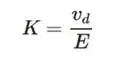
Migration areaThe ion separation region consists of multiple spaced-apart migration electrode zones that form a uniform electric field, driving ion drift. Under the combined influence of the uniform electric field and the neutral gas, ions migrate according to their migration rate.KThey are separated by their differences. Ion mobilityKExpressed as ion velocityCEOWith electric fieldANDFunctions:
three .The main reaction types for the generation of positive and negative ions in the ion mobility spectrum ionization region
3.1Main reaction types for positive ion formation
Ion mobility spectrometer (IMSThe generation of positive ions in the ionization region of the migration tube mainly depends on the proton transfer reaction.(PTR)This is a method using protons (H+The ionization reaction in which ions are transferred from reactant ions to sample molecules. The essence of a proton transfer reaction is proton affinity (…).Proton Affinity,PADifference-driven chemical reactions:
Reactive ions (such asH3THE+As a proton donor, its proton affinity (PAThe molecular weight of the target sample must be lower than that of the target sample.M)ofPAWhen reacting ions collide with sample molecules, ifPAM>PAH3O+Protons spontaneously transfer, generating positive ions from the sample (MH+)。
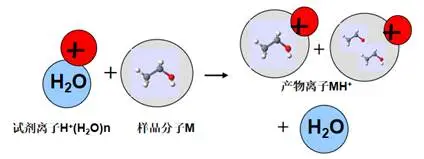
Example reaction equation:H+(H2O)n + M → MH+ + (H2O)n
3.2Main reaction types for negative ion generation
Ion mobility spectrometry (IMSThe generation mechanism of negative ions in the ionization zone mainly depends on electron capture and ion exchange occurring within the ionization zone of the migration tube.-Molecular reaction process. Its core is the interaction between sample molecules and reacting ions (or free electrons) to ultimately form stable negative ions.
① Electron affinity reaction (Electron Attachment,YES):M+e−(H2O)n→M−+nH2THE(Target sample moleculesMIt has a higher electron affinity(EA)
② ions-Molecular reaction process (electron transfer reaction):THE2− + M → M−+ The2
③ Proton stripping reaction (Proton Abstraction):M+O2−→[M−H]−+HO2
3.3Application characteristics of ion mobility spectrometer in positive and negative ion modes
feature | Negative ion mode | Positive ion mode |
Commonly used reaction reagent ions | e-(H2O)n,THE2−,Cl⁻ | H+(H2O)n,NH4+ |
Main reaction mechanism | Electron capture, electron transport, proton stripping | Proton transfer, addition reaction |
Advantages of testing | explosive(TNT, RDX), organic acids, halogenated compounds | Alkalis (drugs, amines), ketones |
Interference source | Ambient oxygen content, humidity | Ammonia, organic solvent vapor |
Four.Workflow of traditional linear electric field ion mobility spectroscopy
①Sample introduction and ionizationAfter gas molecules are introduced through the membrane, they are carried into the ionization region by the carrier gas. Under the influence of the ion source, the carrier gas molecules and sample molecules undergo a series of ionization reactions and ionization.-Molecular reactions form various product ions.
②Ion gate control and ion implantationUnder the influence of an electric field, ionized ion clusters enter the migration region through periodically opening ion gates.
③Ion migration and separation:During the continuous collisions with neutral drifting gas molecules in the countercurrent, the ions are separated due to their different migration rates in the electric field. They arrive at the ion receiving disk one after another and eventually form a current pulse signal on the detector.
④Signal detection and data processing:Each ion component arrives at the ion receiving disk sequentially, generating current pulse signals on the detector. High-speed acquisition software records the changes in ion current over time, generating an ion migration spectrum. Measuring the time taken for ions to traverse the electric field of the migration tube yields the characteristic migration velocity of each ion. By comparing with standard substances or databases containing known migration rates, the sample composition is determined; concentrations are calculated through signal integration.
five.Characteristics of Ion Mobility Spectroscopy Application Technology
It does not require a vacuum system and can operate under atmospheric pressure, allowing the entire instrument to be miniaturized. Its small size, light weight, and low power consumption enable miniaturization, making the device portable and usable in the field.
Its sensitivity is extremely high, even without any enrichment.IMSIt is easy to reach the nanogram(of)These characteristics, including its scale, make it well-suited for rapid online analysis in the field.
The analysis speed is extremely fast, with ions migrating in the migration tube at the millisecond level, making it suitable for rapid on-site analysis.
The instrument system is simple and easy to operate, requires no consumables such as carrier gas, and has low maintenance costs.
No sample pretreatment is required; gaseous components emitted from solid and liquid samples can be detected directly.
It can detect a wide range of components: chemical warfare agents (CWA)Explosives, drugs, and industrial toxic compounds(TIC)Halogenated compounds, ketones, aldehydes, alcohols, amines, organic phosphorus compounds, etc.
six.Ion mobility spectrometer application cases
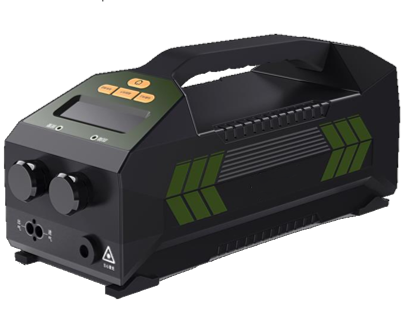
BW-CSD9220Portable chemical agent detector
BW-CSD9220The portable chemical agent detector integrates ion mobility spectrometry and Raman spectroscopy with array electrochemical sensing technologies, enabling it to detect chemical warfare agents in all gaseous, solid, and liquid forms.CWAs) and industrial toxic and harmful gases (TICsAmong them, gaseous chemical warfare agents (sarin, soman, VEX, mustard gas, Lewisite, phosgene, hydrogen cyanide, etc.) and various gaseous industrial toxic gases (hydrogen fluoride, chlorine, hydrogen sulfide, sulfur dioxide) were detected and analyzed by ion mobility spectrometry.
BW-GCIMS410 Gas chromatography-Ion mobility spectrometry (IMP)GC-IMSGas chromatography (GC)GC) technology and ion mobility spectrometry (IMSCombining these technologies, it not only possesses the capabilities of gas chromatography (GC)GCIt has good separation ability and also possesses ion mobility spectrometry (IMS).IMSUltra-high sensitivity, enabling the detection of trace volatile organic compounds in complex matrix samples without sample pretreatment.VOCs)analyze.
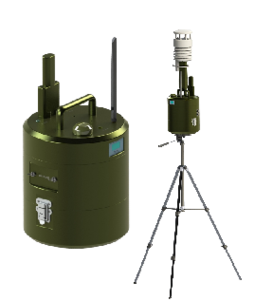
BW-JNCM310Unmanned nuclear and chemical early warning and monitoring system
BW-JNCM310The unmanned nuclear and chemical early warning and monitoring system is a multi-scenario, real-time, unmanned monitoring device. Integrating ion mobility spectrometry technology, nuclear radiation monitoring technology, self-organizing network technology, and BeiDou communication technology, it can monitor chemical toxic gases, industrial toxic agents, and nuclear detection networks in unmanned areas across multiple scenarios. It provides timely information on nuclear and chemical hazards in the region and analyzes the measured data through algorithmic models, providing a scientific basis for personnel protection, evacuation, and response. The ion mobility spectrometry module can monitor, in real-time, sarin gas (…GB), Viex (VX), Soman (GD), hydrocyanic acid (HCNLewisite ()LMustard gasHD), cyanogen chloride (CK), Phosgene (CGIncluding8Chemical warfare agents, and sulfur dioxide (SO2), hydrogen sulfide (H2S), chlorine (Cl2), nitrogen dioxide (NO2Industrial toxic gases such as ( ).
Nuclear and chemical high-altitude reconnaissance and inspection drones
High-altitude nuclear and chemical reconnaissance and detection drones combine drone, IoT, and nuclear and chemical detection technologies to provide integrated solutions for monitoring toxic gases and nuclear radiation in fields such as national defense, nuclear power, and environmental protection. Ion mobility spectrometry, due to its lightweight, small size, and fast detection speed, has become the preferred configuration for detecting high-altitude chemical agents and industrial toxic gases.